Van Morrison and the Cashback opener
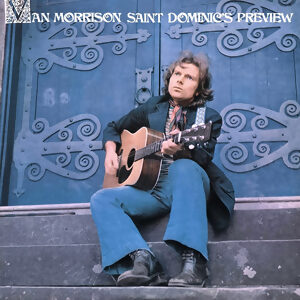
In a desperate bid to outfox AI I am endeavouring to create links between seemingly disparate topics, just for the sake of it. Today, the completely obvious connection between the opening tracks on Van Morrison’s albums of the 70s and learning design. Buckle up.
Van’s Cashback Openers
I’ve been listening to a LOT of Van Morrison recently. I’m not sure what started it, but I’ve been down that rabbit hole for a while now. Van is both an incredible musical genius and an incredible misanthrope. It is one of the perpetual gifts and mysteries of the creative act that great art can come forth from people who you wouldn’t want to spend 5 minutes with. For such a legendary miserable, paranoid man, his music is often filled with unbridled joy.
1968’s Astral Weeks is often regarded as his masterpiece, and it certainly is one. But just as it sits outside of much of musical convention, it also remains distinct in his discography (although you can make an argument that there is a trilogy with Veedon Fleece and No Guru). From 1970’s Moondance through to 1979’s Into the Music he went on an incredible run of albums, comparable to Bowie’s 70s output in consistency and exploration, although different in style. Moondance was very much a reaction to Astral Weeks. Whereas Astral Weeks was mainly long, free form jazz pieces, that weren’t radio friendly, Moondance was three minute pieces of pop rock perfection that pretty much invented radio friendly.
My take is that Morrison learnt from these two albums and decided to combine the approaches. Nearly all of his albums during the 70s start off with an absolute barn-storming opener. He is a contender for most consistently brilliant opening track on an album of any artist during this period. It’s an under-appreciated art I feel. Hit em hard with the first one and then you’ve got them. With Morrison maybe the intention is more, “look you’ve got this amazing track, that’s your album’s money’s worth right there, now let me get on with the other stuff.” Jackie Wilson Said, Domino, Wild Night, Bright Side of the Road, And it Stoned Me – you’re not going to argue with any album after one of those openings. These are the Cashback songs, that allow Morrison to explore the wanderings of, Listen to the Lion, say. Except on Moondance where it continues all in the same vein largely.
Ironically (an oft-used word when it comes to discussing Van), perhaps his best opening song, certainly the most beautiful, is not in the classic Cashback mode. The distinctly un-radio friendly Fair Play, which kicks off Veedon Fleece, has delicate strumming, and light jazz piano, before Van starts singing in a nasal tone, taking us on a tour of rural Ireland while he considers the tension of past life in San Francisco. Typical of that album however, it is no poppy three minute up tempo number, instead luring the listener into the rich tapestry that follows.
By contrast, the opener to 1989’s Avalon Sunset is the anti-Cashback song, a song so bad that the album never recovers from it. A shallow duet with Cliff Richard (FFS!), “Whenever God Shines His Light” displays the worst tendencies of Morrison’s faith songs. It is unforgivably smug, like one of those Christians who when you tell them you are an atheist respond with a condescending smile and a promise to pray for you. Although the rest of the album has some highlights, it never fully recovers from that opening misstep.
Get to the Learning Design!
In his autobiography, Island Records founder Chris Blackwell, recounts how many artists were snooty about singles and buried their best tracks deep down in an album, instead of opening with it, as if the listener has to earn the right to get it. I think we do this with course design sometimes, hiding the good stuff in week 8 or whatever. There is a strong argument I feel for a Cashback opening salvo. In that first week hit the students with something interesting – this can be a juicy anecdote, an application of concept to current affairs, a big question they will be exploring over the weeks, a fascinating experiment, and so on. We often spend that first week onboarding, doing ice-breakers and establishing some foundational knowledge. Or even worse, there is the equivalent of that Avalon Sunset opener, where the student is immediately plunged into some deep reading where every sentence is akin to digging wet clay, in a kind of “weed out the weak students early” mentality.
With the ICEBERG model we looked at issues that can cause students to stop studying. I think getting students to buy in early on is an important factor. If that first weeks peaks interest and excitement, then it gives the educator a lot of leeway to undertake more difficult stuff later on. It needs to be content related, not just an icebreaker (although forming social connections is also important), something that engages the students conceptually with the subject matter. In ten years time this might be the one thing they remember from that course. My advice then when designing a course is to look at week one and think, “have I got a Cashback opener in there? Is there a “Jackie Wilson Said?””. It needn’t be long, but if there isn’t one then get one in there.
And while you’re considering that, you can listen to the Van’s Cashback songs from the 70s.
Subscribe to the newsletter to get each month’s posts plus subscriber only content! (A new picture of my dog Teilo)


